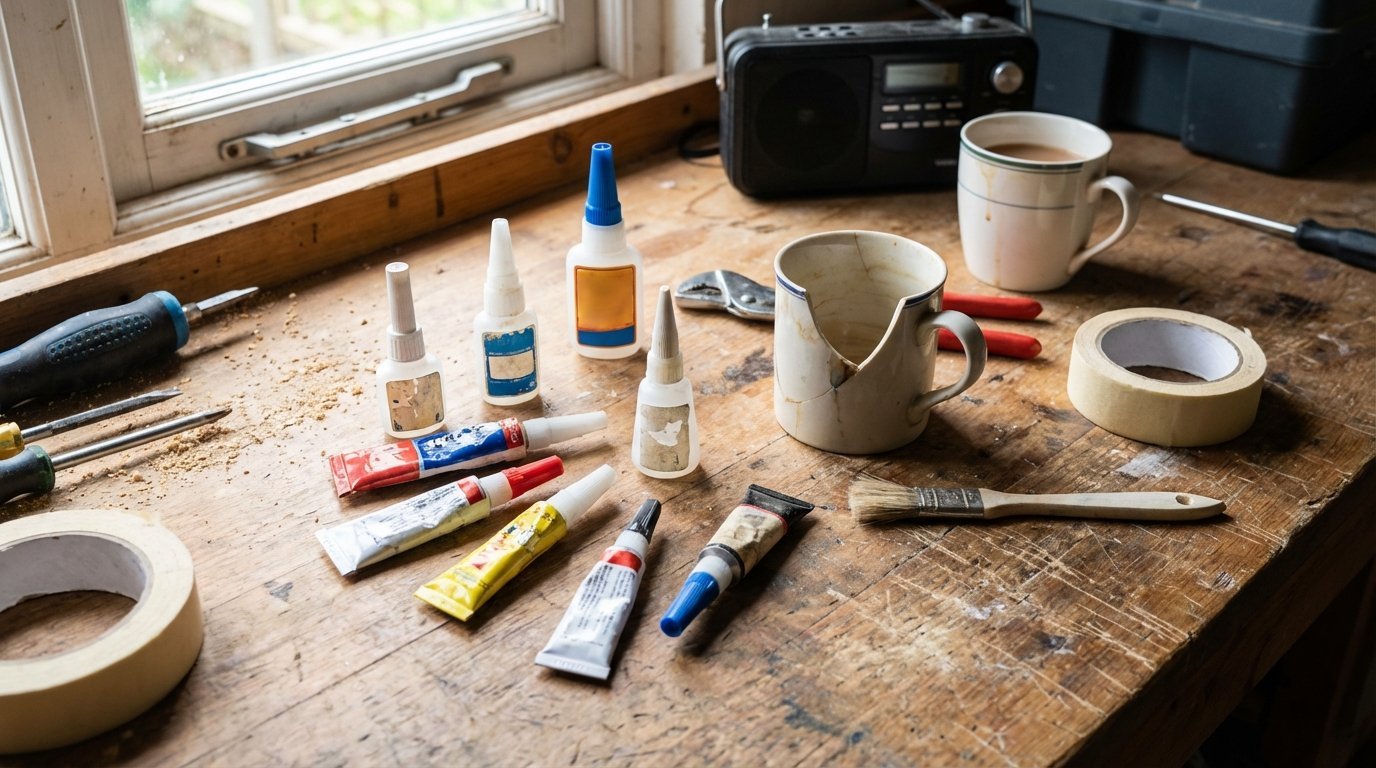
The short answer: for most household repairs, buy a multi-pack of small 3g liquid super glue tubes. It grabs in under a minute, bonds plastic, wood, metal, rubber and ceramics, and a five-pack costs less than a coffee.
Small tubes are the point, not a compromise — once opened, super glue starts curing in the air, so five fresh 3g tubes will outlast one big bottle that goes gummy in the drawer. Choose a gel for upright or fiddly work, and skip super glue entirely for heavy jobs — that is epoxy territory. Our three picks are at the bottom of this page.
Every kitchen drawer in Britain seems to hold the same thing: a crusty old tube of super glue with the cap welded on, kept “just in case” and useless when the case arrives. This guide is the short version of what actually works — what super glue is, which type suits which repair, the habits that make a bond hold, and three glues you can buy today for under a fiver.
What is super glue, exactly?
Super glue is cyanoacrylate, a resin that hardens on contact with the tiny amount of moisture in the air and on whatever you are fixing. That is why it is so fast: handled carefully, most bonds grab in 10 to 60 seconds. It reaches handling strength within minutes, although the full cure can take up to 24 hours.
One thing nearly everyone gets wrong: a thin layer bonds stronger than a thick one. A small drop spread thin beats a big blob every time, because the glue only fully cures where it meets moisture — the middle of a thick dollop can stay soft and weak.
The one most people should buy: a liquid multi-pack
Ordinary liquid super glue in small tubes covers about eighty per cent of home repairs — broken mugs, loose shoe soles, cracked plastic housings, snapped ornaments, wobbly chair rungs (the small ones), kids’ toys. It is cheap, it is everywhere, and used fresh it is properly strong in shear: try pulling a well-glued join straight apart and you will usually break the material before the glue.
Buy it as a multi-pack of 3g tubes rather than one large bottle. Each tube stays sealed and fresh until its turn, and when one does clog or thicken you bin it and open the next instead of fighting with a pin and bad language.
Be honest about the limits, though. Super glue barely bonds the waxy plastics — polypropylene and polyethylene, the stuff of storage boxes and washing-up bowls — without a special primer. It does not fill gaps, and it is brittle if the joint gets peeled or knocked from the side.
When a gel is the better choice
Gel super glue is the same chemistry, thickened so it stays where you put it. That makes it the right pick for vertical surfaces (a hook going back on a tile, a trim strip), for china and ceramics where a run would spoil the finish, and for anything fiddly where you want a few extra seconds of control. It grabs a touch slower than the liquid — allow a minute rather than seconds — and usually costs a little more per gram.
Heavy repair? That is epoxy’s job
If the repair takes weight, heat or water — a chair leg, a metal bracket, a kettle handle’s mounting, anything outdoors — put the super glue down. Two-part epoxy (resin plus hardener, mixed as you use it) fills gaps, shrugs off water and ends up far stronger. The trade-off is patience: a few minutes of working time, then hours before it reaches full strength. For small, tight-fitting breaks it is overkill; for structural ones it is the only sensible choice.
How to get a bond that actually holds
- Clean both faces. Grease and dust are the usual reason glue “does not work”. Wipe the surfaces, and let anything damp dry first.
- Dry-fit before you open the tube. Once the glue is on, you have seconds, not minutes.
- Use less than you think. A thin film on one face only. If it squeezes out in a bead, that was too much.
- Press and hold for 30 to 60 seconds without wiggling the joint while it grabs.
- Then leave it alone. Handling strength is not full strength — give bigger items a few hours, ideally overnight, before they go back to work.
Our picks: three glues worth buying
These are the actual glues listed on this site, all cheap, all in the small-tube format this guide recommends. The 5-pack is the drawer staple; the 3-pack is the same idea if you glue less often; the 50g contact adhesive is the bigger tube for larger contact-bonding jobs like laminates, rubber and soles.
 Adhesives & GlueSuper Glue 3g 5 Pack
- ✓ ✔ Fast bonding in seconds
- ✓ ✔ Multiple tubes prevent drying out
- ✓ ✔ Works on a wide range of materials
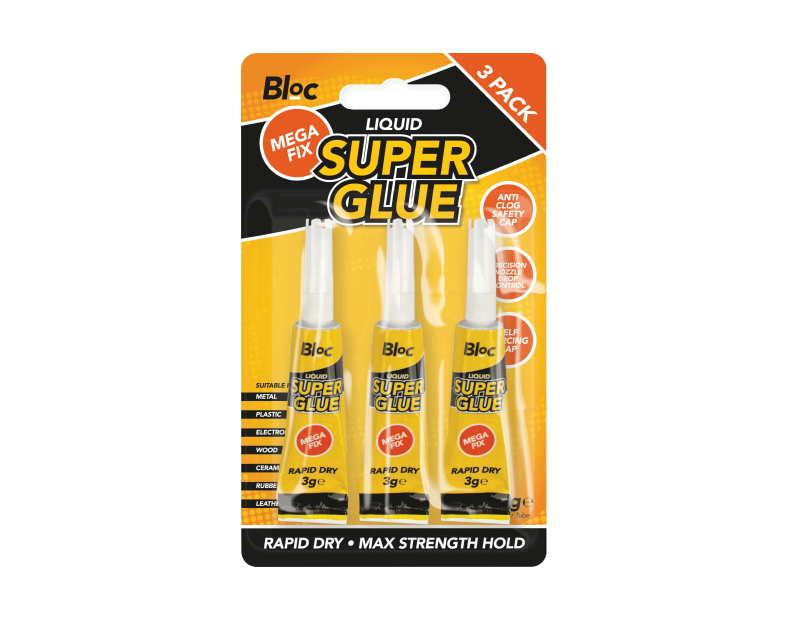 Home & KitchenSuper Glue 3g 3 Pack
- ✓ ✔ Fast-drying and strong bond
- ✓ ✔ Anti-clog cap keeps glue usable longer
- ✓ ✔ Precision nozzle for accurate application
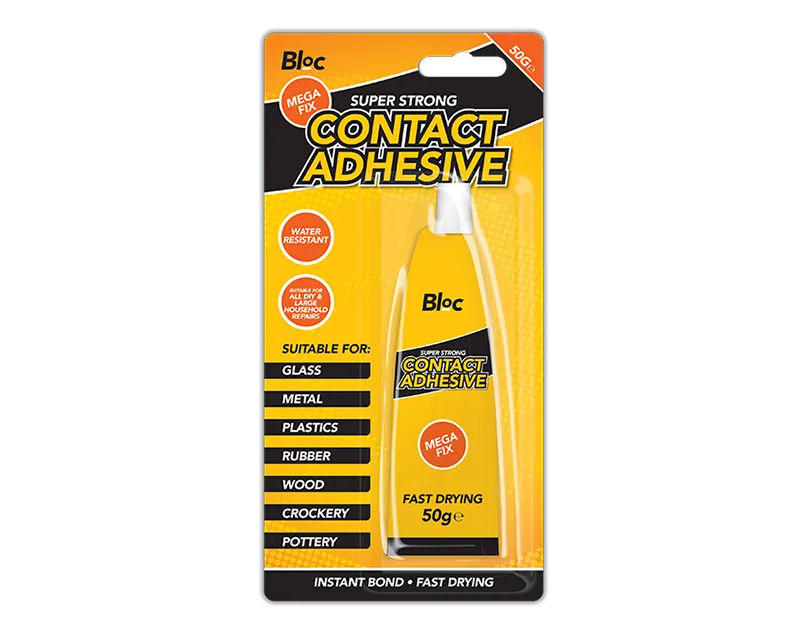 Adhesives & GlueContact Adhesive 50g
- ✓ ✔ Fast-acting bonding formula
- ✓ ✔ Strong and durable hold
- ✓ ✔ Works on a variety of materials
Prices and stock change often, so the buttons above show the latest at each shop. Some are affiliate links — they cost you nothing extra and help keep this site running. See our affiliate disclosure.
FAQs
What is the strongest super glue in the UK?
For small, tight-fitting repairs, fresh liquid cyanoacrylate gives the strongest instant grab. For outright strength on bigger or load-bearing joints, two-part epoxy beats any super glue. “Strongest” depends on the job — match the glue to the repair, not the other way round.
Does super glue work on plastic?
Yes, on most hard plastics — it is one of its best materials. The exceptions are the waxy plastics, polypropylene and polyethylene (storage boxes, washing-up bowls, some toys), which normal super glue barely bonds. If a plastic feels greasy or waxy, look for a plastic-bonding system with a primer pen instead.
How long does super glue take to dry?
It grabs in about 10 to 60 seconds, reaches handling strength within a few minutes, and fully cures in up to 24 hours. Gel formulas grab slightly slower than liquids. Warm, slightly humid air speeds the cure; cold, very dry air slows it.
Can super glue be used on metal?
Yes, for small metal parts and trim. Wipe the metal clean and dry first — any oil or grease will ruin the bond. For brackets and anything structural or load-bearing, epoxy is the stronger and safer choice.
How do I get super glue off my skin?
Do not pull bonded fingers apart. Soak the area in warm soapy water and gently roll the bond apart; anything left wears away naturally in a day or two. Acetone (many nail varnish removers) dissolves cured super glue, but keep it away from plastics and fabrics it can damage, and never use it near eyes.
Why did my tube of super glue go hard?
Because it was doing its job. The moisture in ordinary air starts the cure the moment a tube is opened, so an opened tube slowly thickens over the following weeks. Store tubes upright in a sealed jar or tub in a cool, dry cupboard to slow it down — and buy small tubes so there is less to lose.